
HIKING FROM THE DOOR
Hiking begins at the front door.
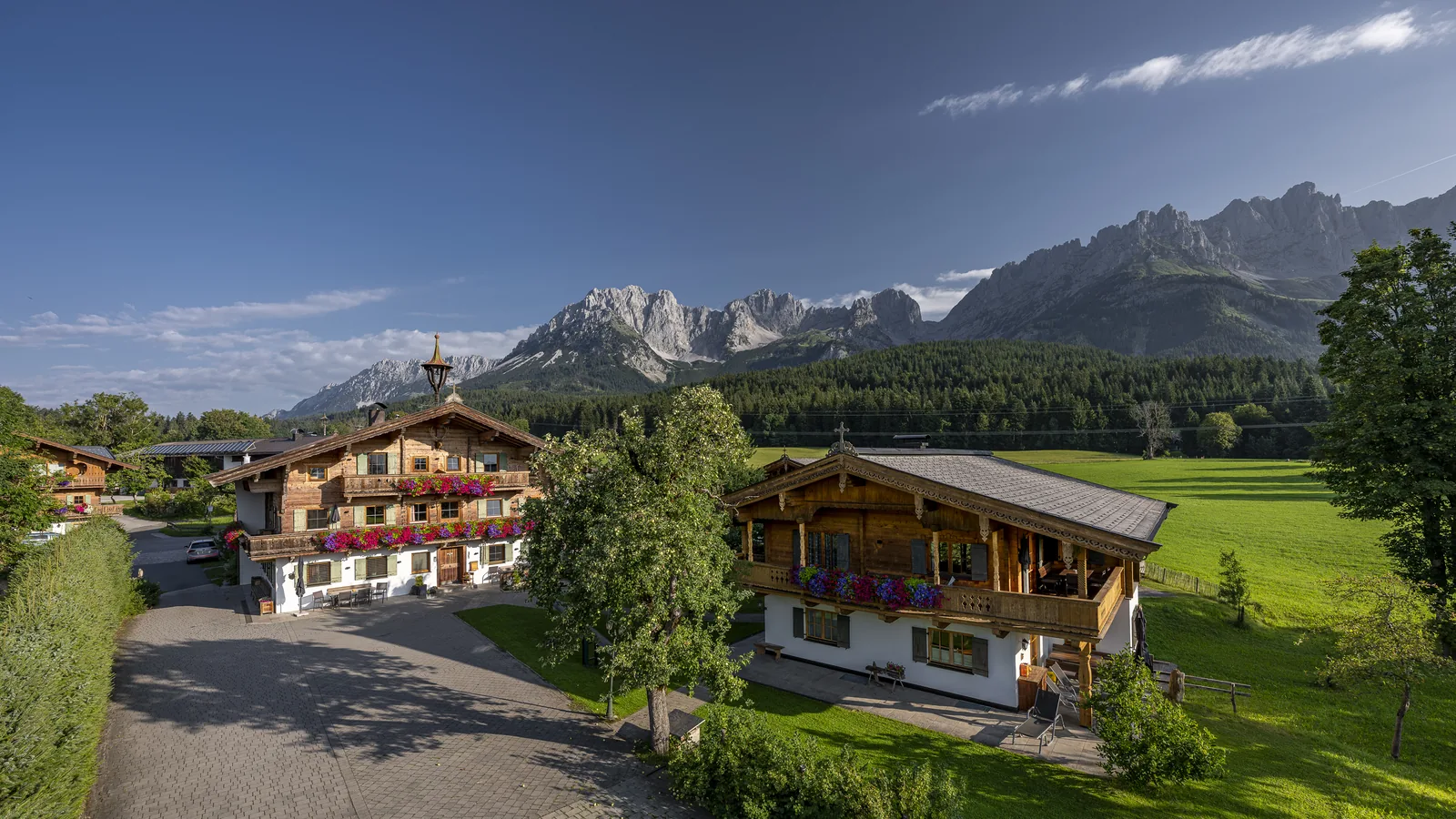
One of the Gafalhof’s secrets: we lie so close to the foot of the Kaiser that the first paths begin at the farm itself. A trail starts right on the Schwendterweg and leads you past our animals, through the woods and out into the landscape, with the Wilder Kaiser in view the whole way. Going is one of the four sunny-side villages at the foot of the Kaiser — along with Ellmau, Scheffau and Söll.
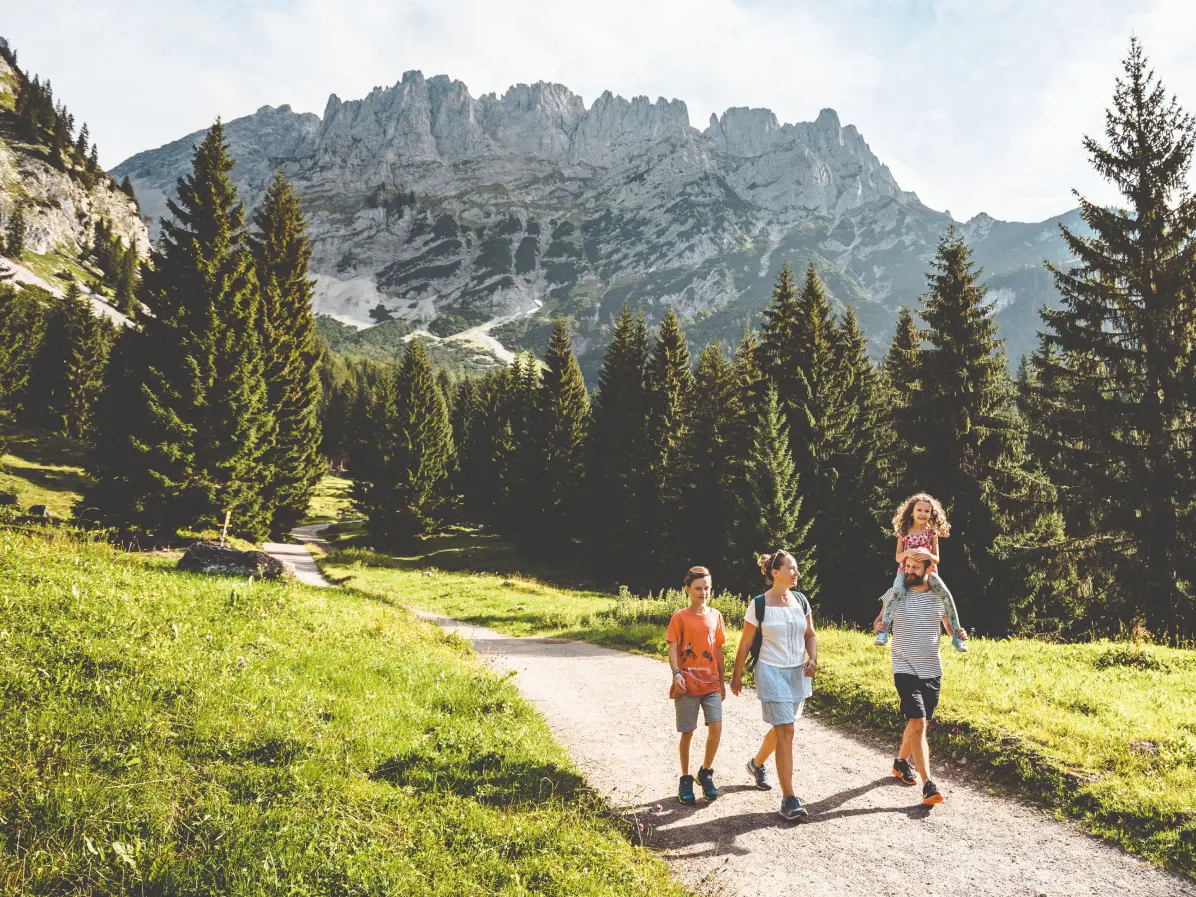
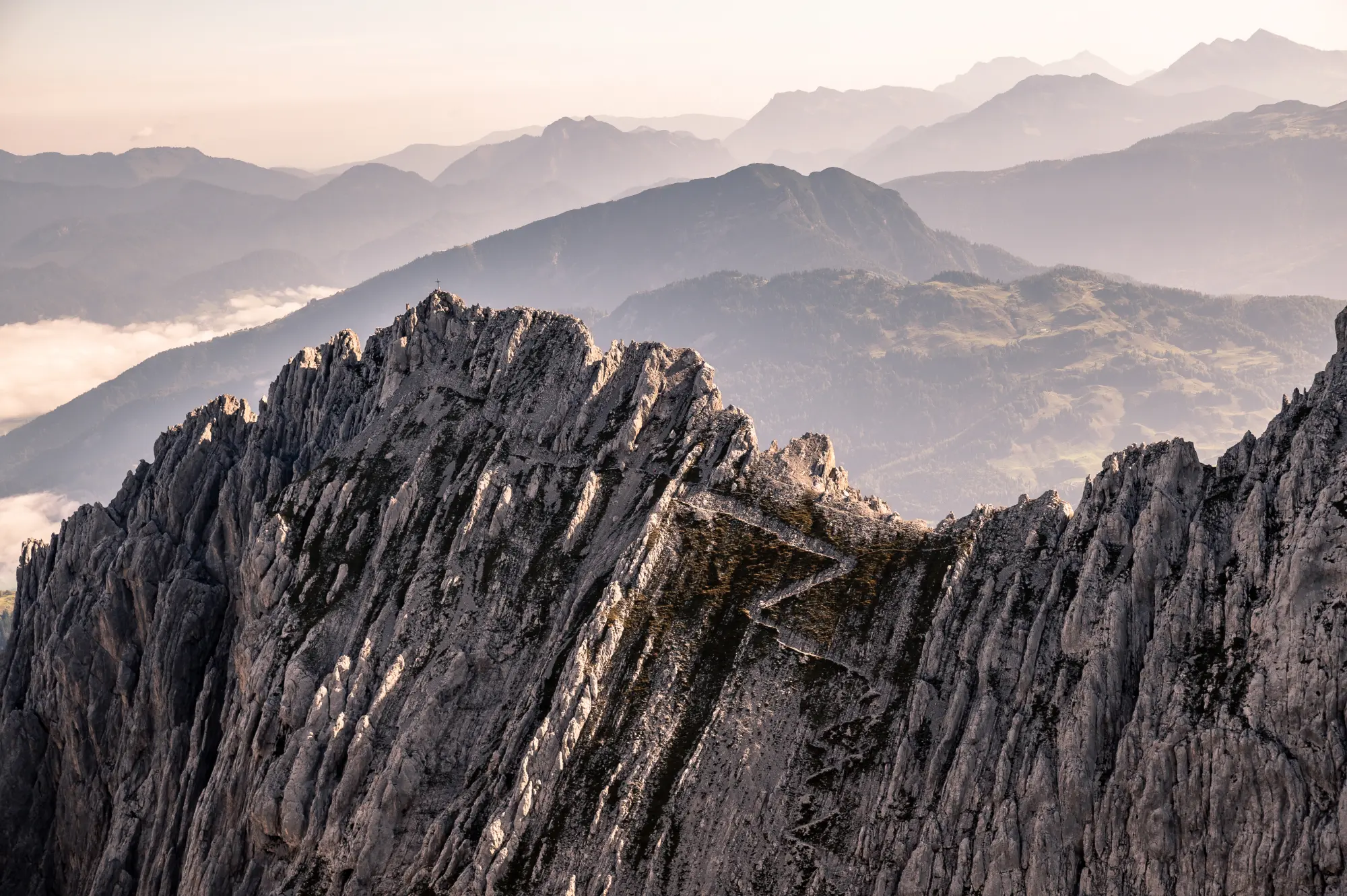
From here the whole path network around the Wilder Kaiser opens up: over 700 kilometres of waymarked walking and mountain paths in the Wilder Kaiser nature reserve. The region was the first alpine region in Austria to be given the Austrian hiking quality seal — an award for signposting, path quality and safety. From the Astberg (1,267 m, reached by chairlift from the village) gentle panoramic paths lead up to the Astbergsee. Add to that via ferratas, climbing gardens and alpine tours for the sure-footed.
HIKING FROM THE DOOR
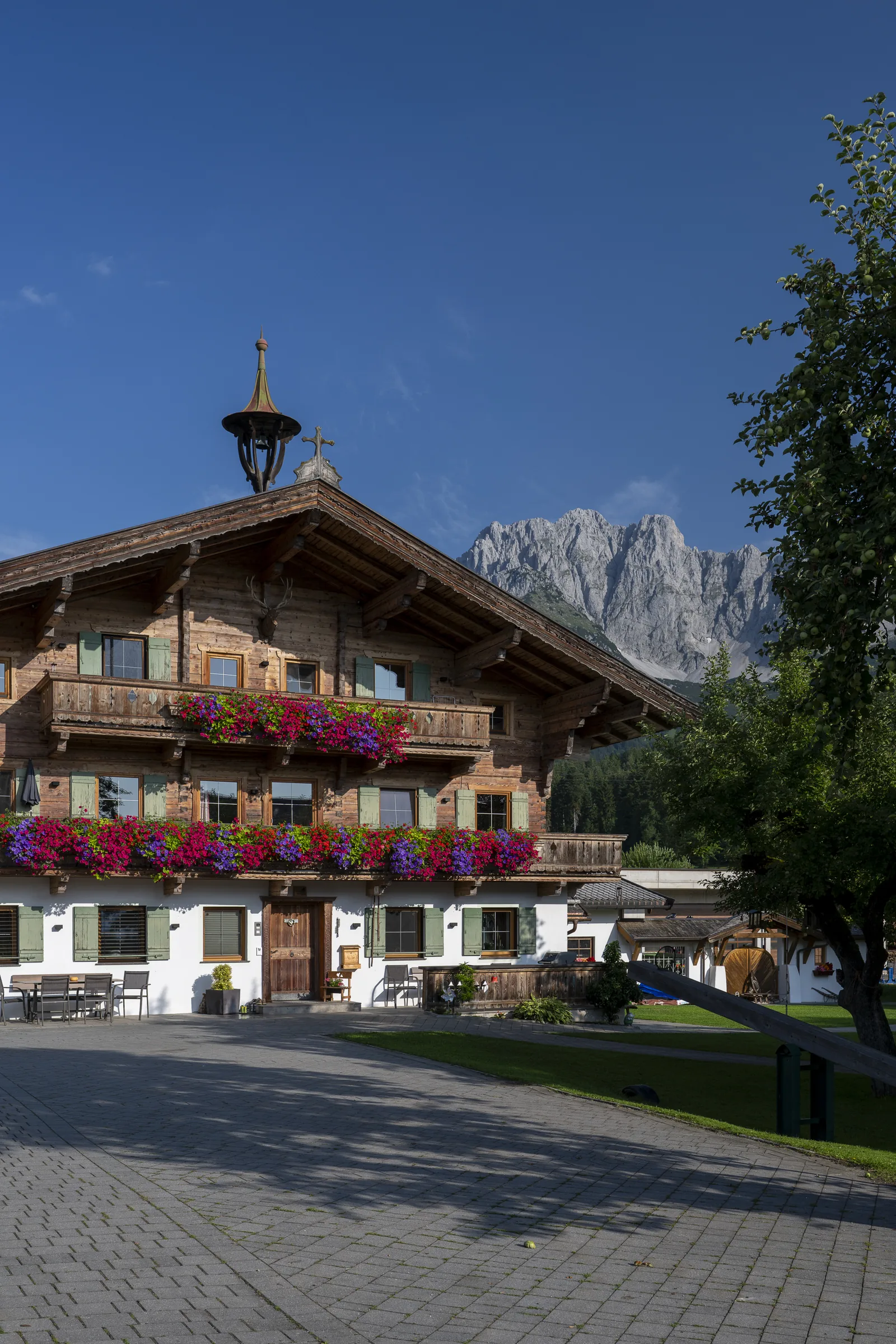
The first paths start at the Gafalhof, no drive needed
700+ KM OF PATHS
A waymarked network all around the Wilder Kaiser

2,344 M WILDER KAISER
The Ellmauer Halt — highest summit, both goal and backdrop

HIKING QUALITY SEAL
The first alpine region in Austria to receive it
HIKING FROM THE GAFALHOF
From the farmyard straight onto the path.
There is a route to suit every level of fitness and every age — and many of them start at Schwendterweg 78, right at the Gafalhof. Walking maps and current path information are waiting at the breakfast table. For planning on a phone we recommend the free Wilder Kaiser app with GPS tracks and offline maps.
If you would rather walk with a guide: in high season the Wilder Kaiser tourist board runs guided walks — from a family walk to an alpine pasture to the Bergdoktor walk. Usually at no extra charge with the Wilder Kaiser GästeCard. Details, dates and booking: wilderkaiser.info.
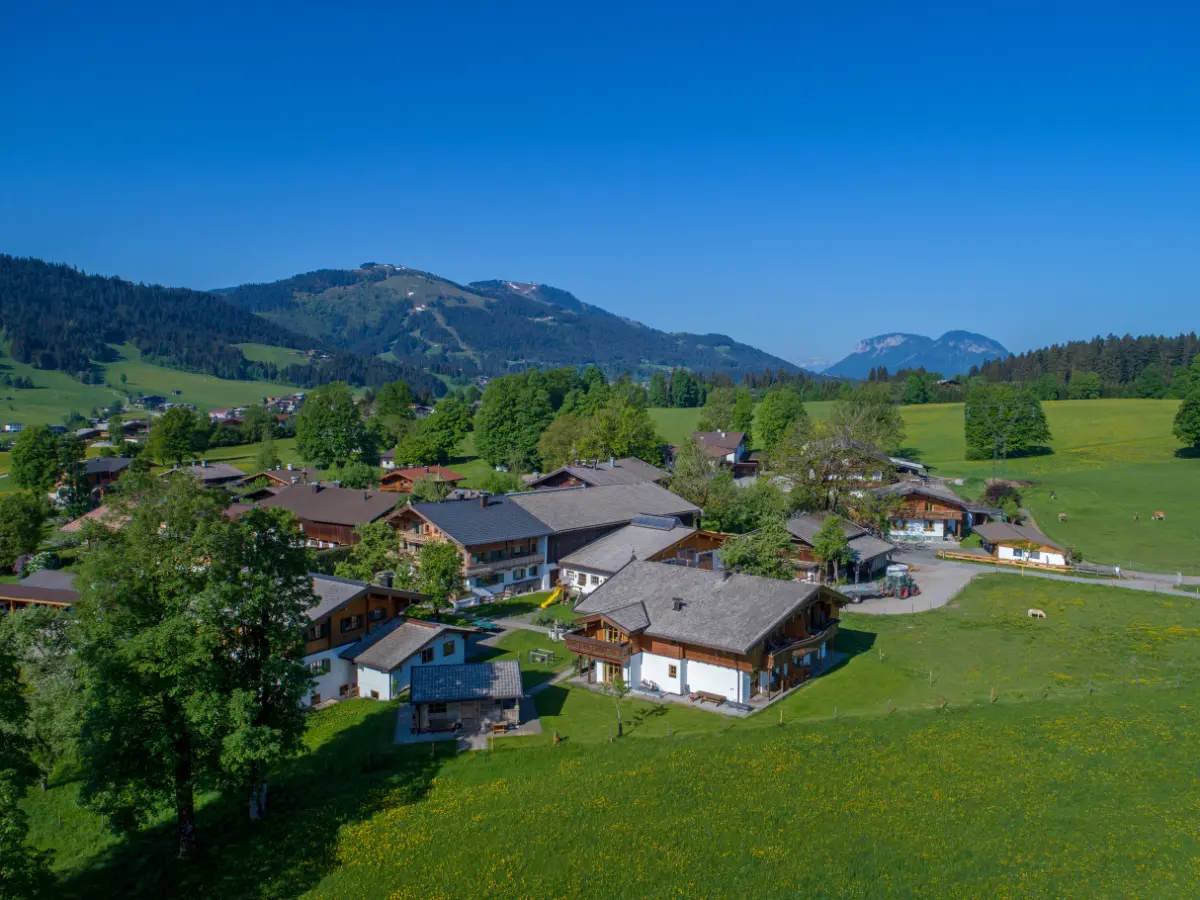
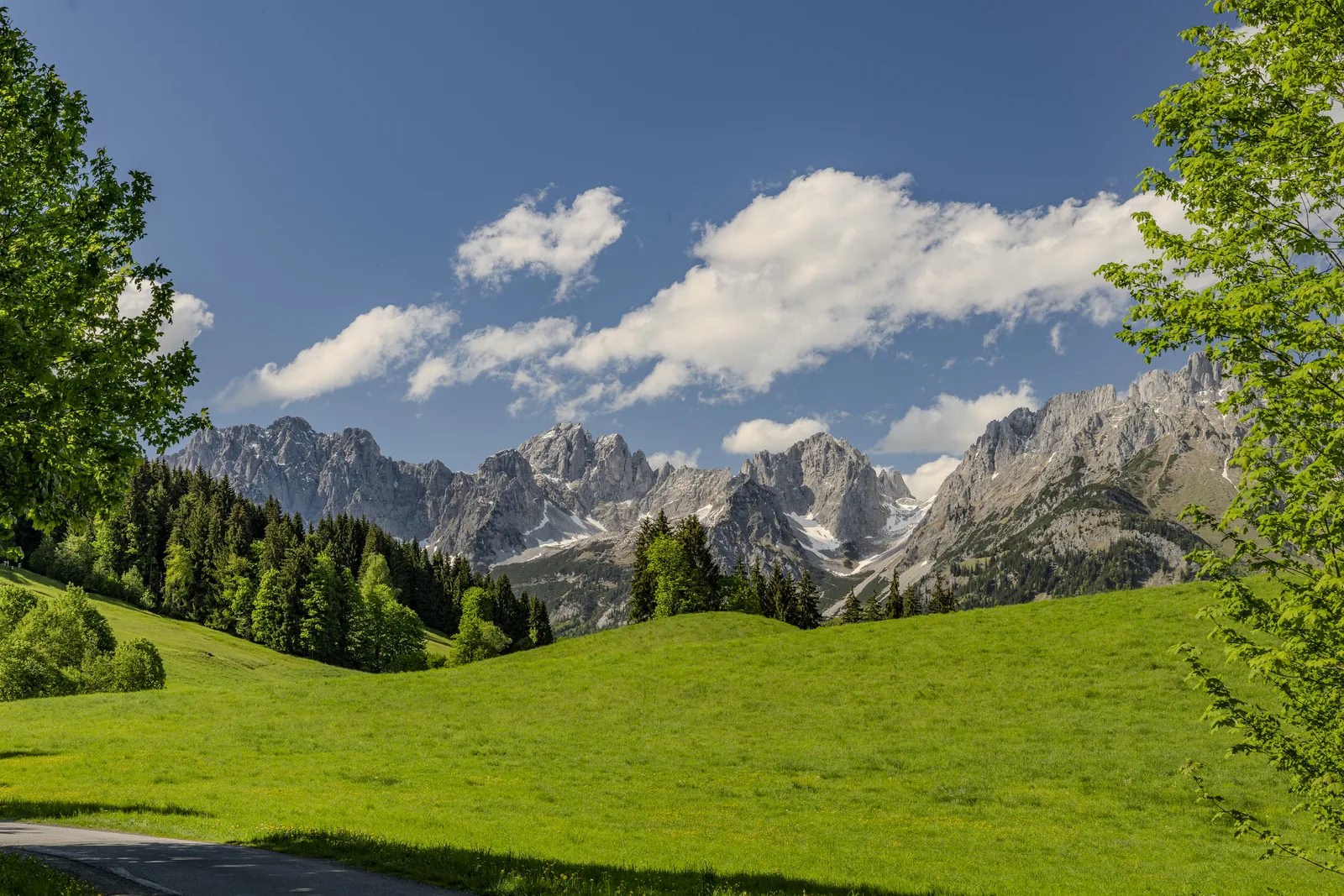
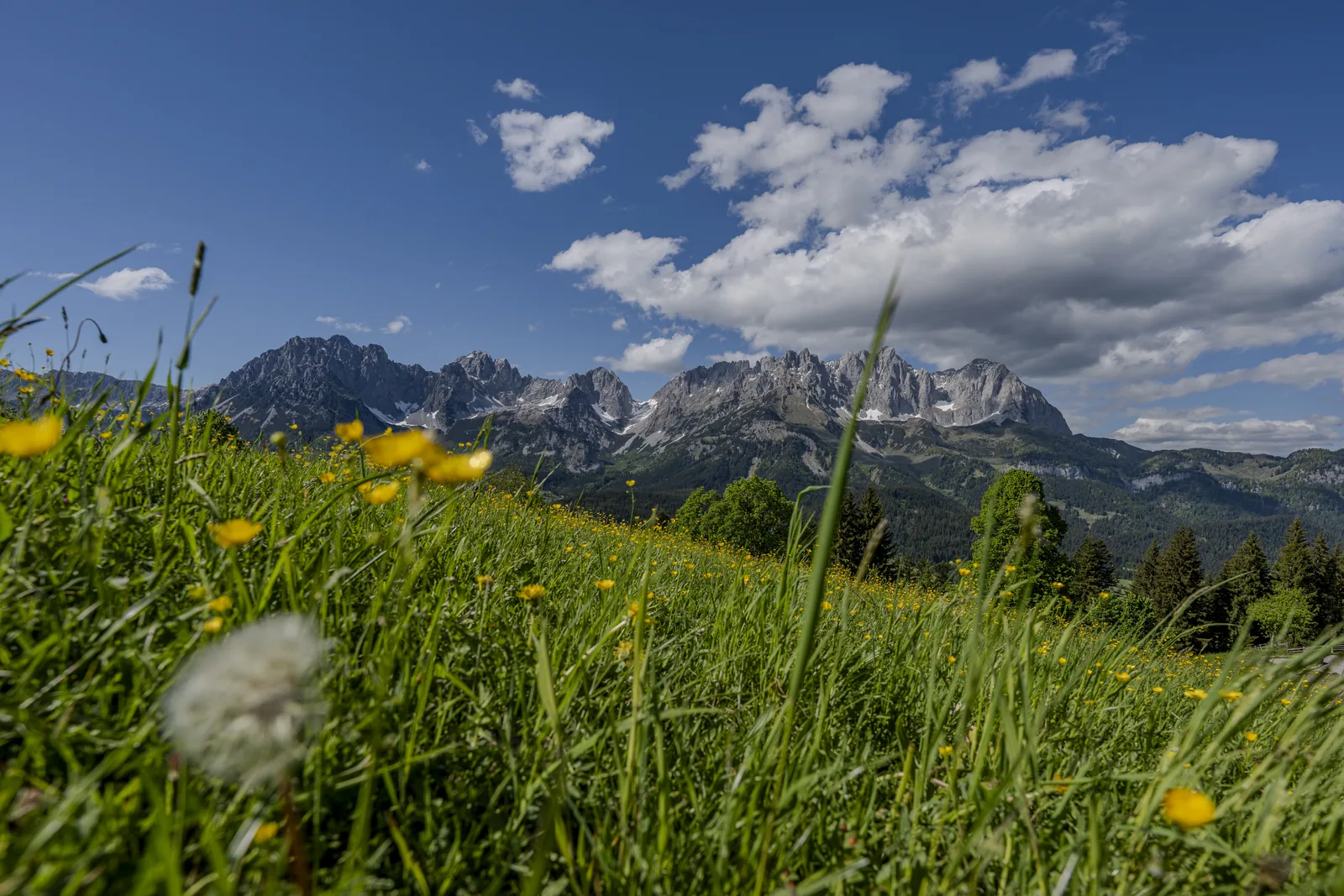
Three levels of walking
Easy paths for families and for pleasure.
Moderate panoramic paths on the Kaiser.
Demanding summit and mountain tours.
Hiking from Going
Frequently asked questions
Over 700 kilometres of waymarked walking and mountain paths run through the Wilder Kaiser region. It lies entirely within the nature reserve and was the first alpine region in Austria to receive the Austrian hiking quality seal — recognition for signposting, path quality and safety.
Many paths begin at Schwendterweg 78, right outside our door. From here easy loops lead to the alpine meadows, as do climbing routes up the Astberg (1,267 m, or take the chairlift). For planning on a phone, the free Wilder Kaiser app with GPS tracks and offline maps is useful.
The region has plenty of family-friendly routes — easy loops on the alpine pastures, walks with lift support (Astbergbahn, Hartkaiserbahn, Hochsöll) and themed trails such as the Hexenwasser in Söll. There is an overview with concrete family suggestions on wilderkaiser.info under “Wandern mit Kind” — and we are happy to advise you in person.
For easy loops, sturdy trainers or light walking shoes are enough. For panoramic and mountain paths you want walking boots with a proper sole. For alpine tours (Wilder Kaiser 2,344 m, Scheffauer 2,111 m), ankle-high boots, rain protection, sun protection and at least 1.5 litres of water per person are essential. One important thing: check the weather every morning — on the north face of the Kaiser it can turn quickly in summer.
Yes. In high season the Wilder Kaiser tourist board runs several guided walks a week — among them the Bergdoktor walk, family walks to the alpine pastures and sunrise mountain tours. Book at the tourist office in Going; most are free with the Wilder Kaiser GästeCard. Dates: wilderkaiser.info.
The Kaiserkrone is a long-distance trail around the Wilder Kaiser massif — a multi-day hut-to-hut route linking the sunny side (Ellmau, Going, Scheffau, Söll) with the north side. A classic for keen walkers who want to circle the Kaiser. Details and stages
The season runs from May to October. June is especially lovely (the alpine meadows in flower, everything fresh and green) and so is September (clear views, mild temperatures). July and August are warmer, and every hut is open. From mid-October the alpine huts close and higher paths can still hold snow.